Strategy Overview
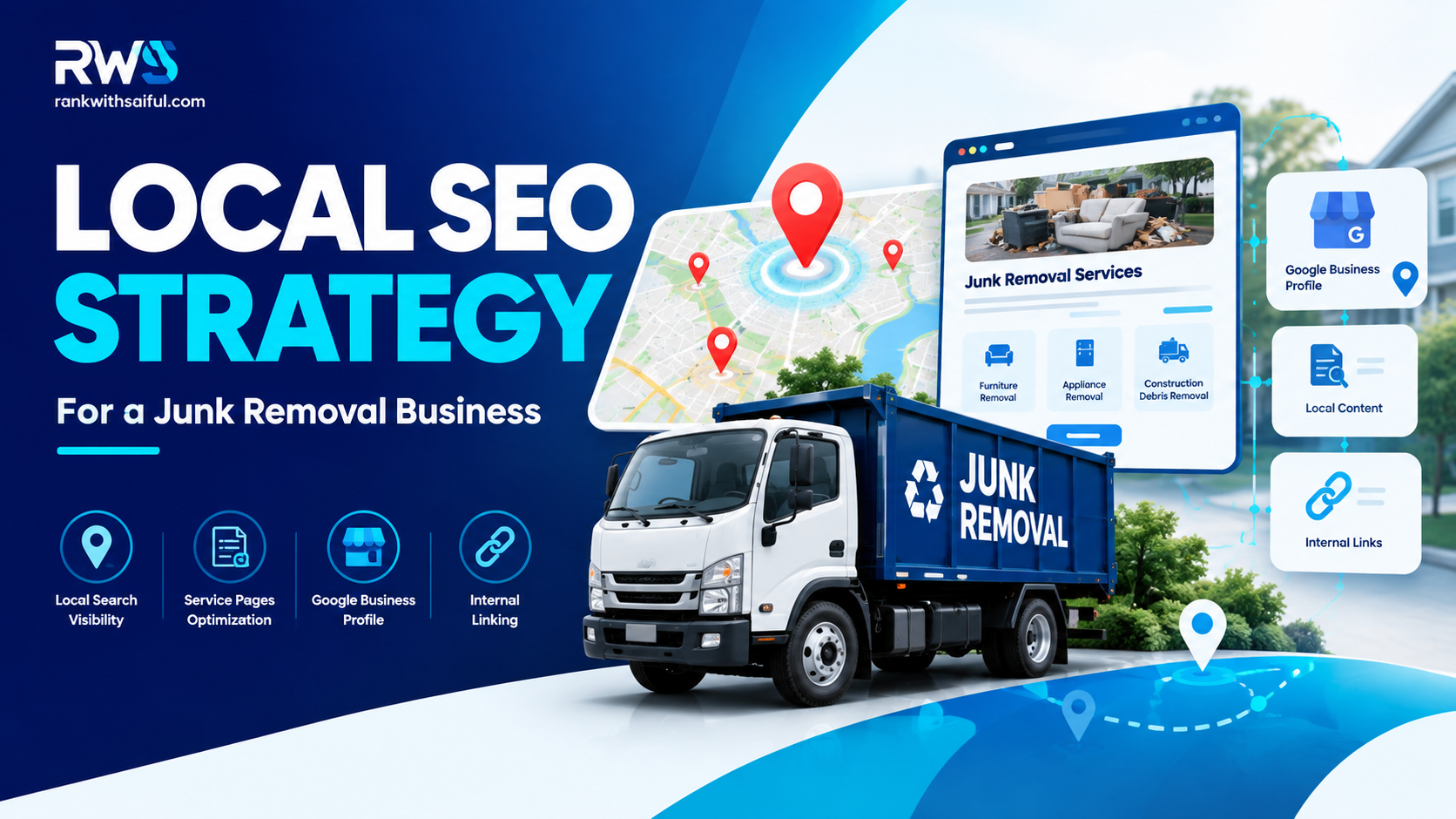
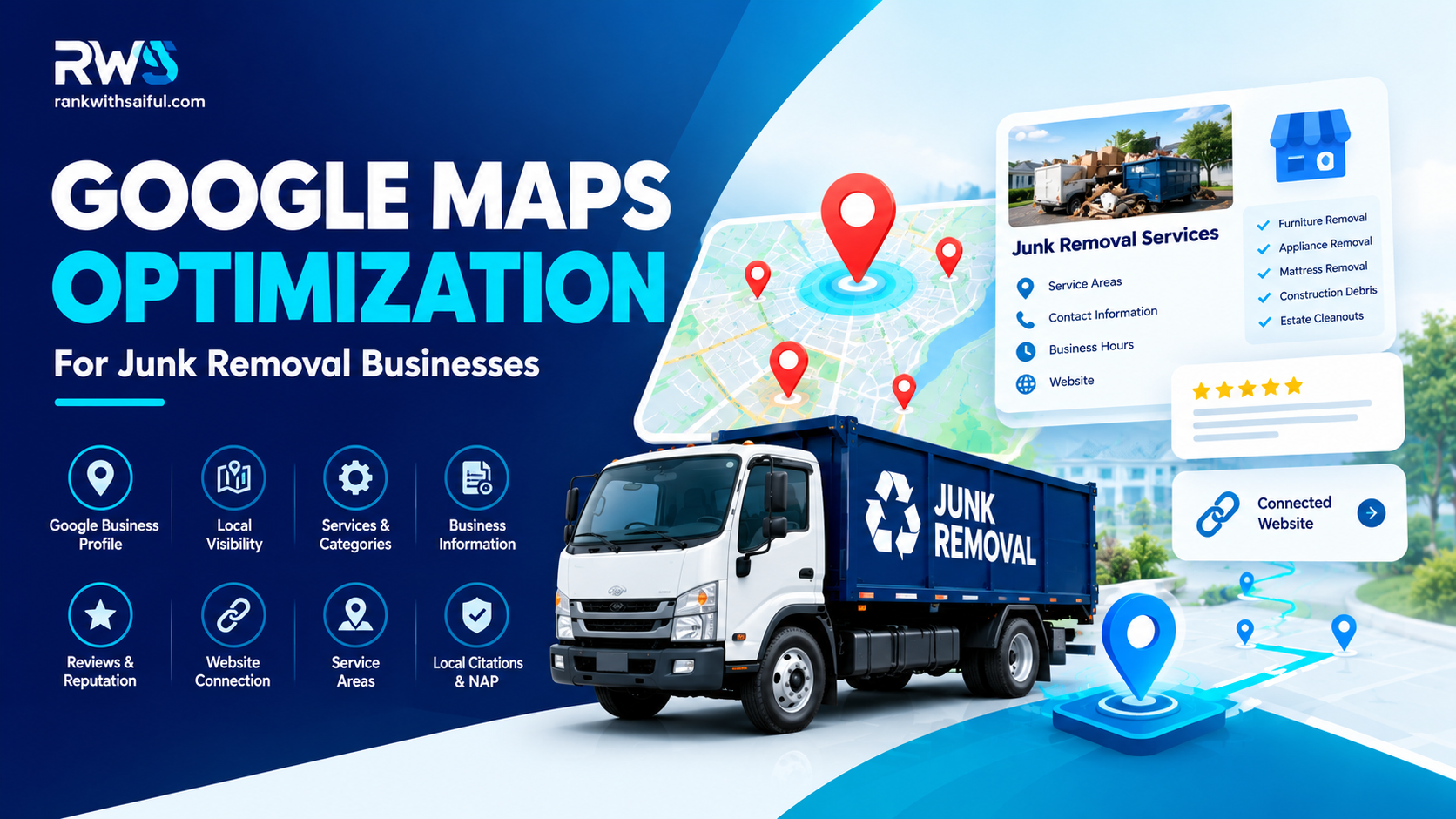
For a local Junk Removal business, Google Maps can be an important part of how potential customers discover nearby services.
A strong Google Maps optimization strategy is not about adding keywords everywhere or trying to manipulate rankings. It starts with creating an accurate, complete, and useful Google Business Profile and connecting it with a strong local website presence.
This strategy focuses on the key areas that can help a Junk Removal business build a clearer and more trustworthy local search presence.
What This Strategy Covers
• Google Business Profile category strategy
• Business information accuracy
• Services and business description
• Service-area relevance
• Business photos
• Review strategy
• Website and GBP connection
• Local citations and NAP consistency
• Local website relevance
• Ongoing performance monitoring
1. Choose the Right Google Business Profile Category
The primary category helps describe what the business is and what type of service it provides.
For a Junk Removal business, category selection should reflect the actual business rather than simply choosing categories because they contain desirable keywords.
Additional categories can be considered when they genuinely represent services offered by the business.
Category Selection Principles
• Choose a primary category that accurately represents the business.
• Use additional categories only when they are relevant.
• Do not select unrelated categories simply to increase keyword coverage.
• Review categories as the business and its services evolve.
The objective is accurate business representation, not category manipulation.
2. Complete and Maintain Accurate Business Information
A Google Business Profile should provide customers with clear and accurate information about the business.
Important information includes:
• Business name
• Business category
• Address or service-area information, where applicable
• Phone number
• Website
• Business hours
• Services
Business information should remain consistent with the information presented on the company website and other important local business listings.
3. Build a Clear Service Profile
Junk Removal companies often provide several related services, and customers may search for specific services rather than simply searching for a company.
Examples may include:
• Furniture removal
• Appliance removal
• Mattress removal
• Construction debris removal
• Estate cleanouts
Services listed on the Google Business Profile should reflect what the business actually provides.
Connect Services With the Website
The services presented in the Google Business Profile should be supported by useful information on the business website.
For example, a Furniture Removal service listed in the profile can be connected to a dedicated Furniture Removal service page when that page provides useful and relevant information.
This creates a clearer relationship between the business profile, the website, and the services customers are looking for.
4. Use Service Areas Carefully
Service-area businesses need to communicate where they actually provide their services.
Service-area information should reflect the real operating area of the business rather than being used simply to target as many locations as possible.
Keep Local Relevance Natural
A useful local presence should be supported by the overall business information, website content, service areas, and other legitimate local signals.
Creating a large number of location references without providing genuine value can result in a poor user experience and does not create a stronger strategy by itself.
5. Build a Strong Photo Strategy
Photos can help potential customers understand the business and the services it provides.
For a Junk Removal company, useful original photos may include:
• Junk removal trucks
• Team or business operations
• Equipment
• Completed removal work
• Different types of materials being removed
• Business location or relevant local context
Original business photography can provide customers with more useful information than generic stock imagery.
6. Build a Genuine Review Strategy
Reviews can help potential customers evaluate a local business before contacting it.
A sustainable review strategy should focus on providing a good customer experience and making it easy for genuine customers to leave honest feedback.
Review Best Practices
• Ask real customers for honest reviews.
• Make the review process easy to understand.
• Respond professionally to reviews.
• Pay attention to recurring customer feedback.
• Never create fake reviews or manipulate customer feedback.
Reviews should be treated as part of the customer’s experience and reputation, not simply as a keyword placement opportunity.
7. Connect the Google Business Profile With the Website
The website and Google Business Profile should work together as parts of the same local search presence.
The website should clearly explain the business, its services, service areas, and how customers can get in touch.
Relevant service pages and useful local content can provide additional context about the business and its services.
Useful Website Connections
• Google Business Profile → Homepage
• Google Business Profile → Relevant service pages
• Service pages → Related service content
• Blog content → Relevant service pages
• Location content → Relevant services
This creates a more connected local search ecosystem instead of treating the Google Business Profile and website as separate assets.
8. Maintain Consistent Local Business Information
Business information should be accurate and consistent across important local directories and business listings.
Key information to review includes:
• Business name
• Address
• Phone number
• Website
When incorrect or outdated information appears across the web, it should be reviewed and corrected where appropriate.
Focus on Quality, Not Quantity
Local citations should not be approached as a numbers game.
The focus should be on accurate information and relevant, trustworthy business listings rather than creating large numbers of low-quality citations.
9. Strengthen Local Website Relevance
Google Maps optimization should not be isolated from the rest of the Local SEO strategy.
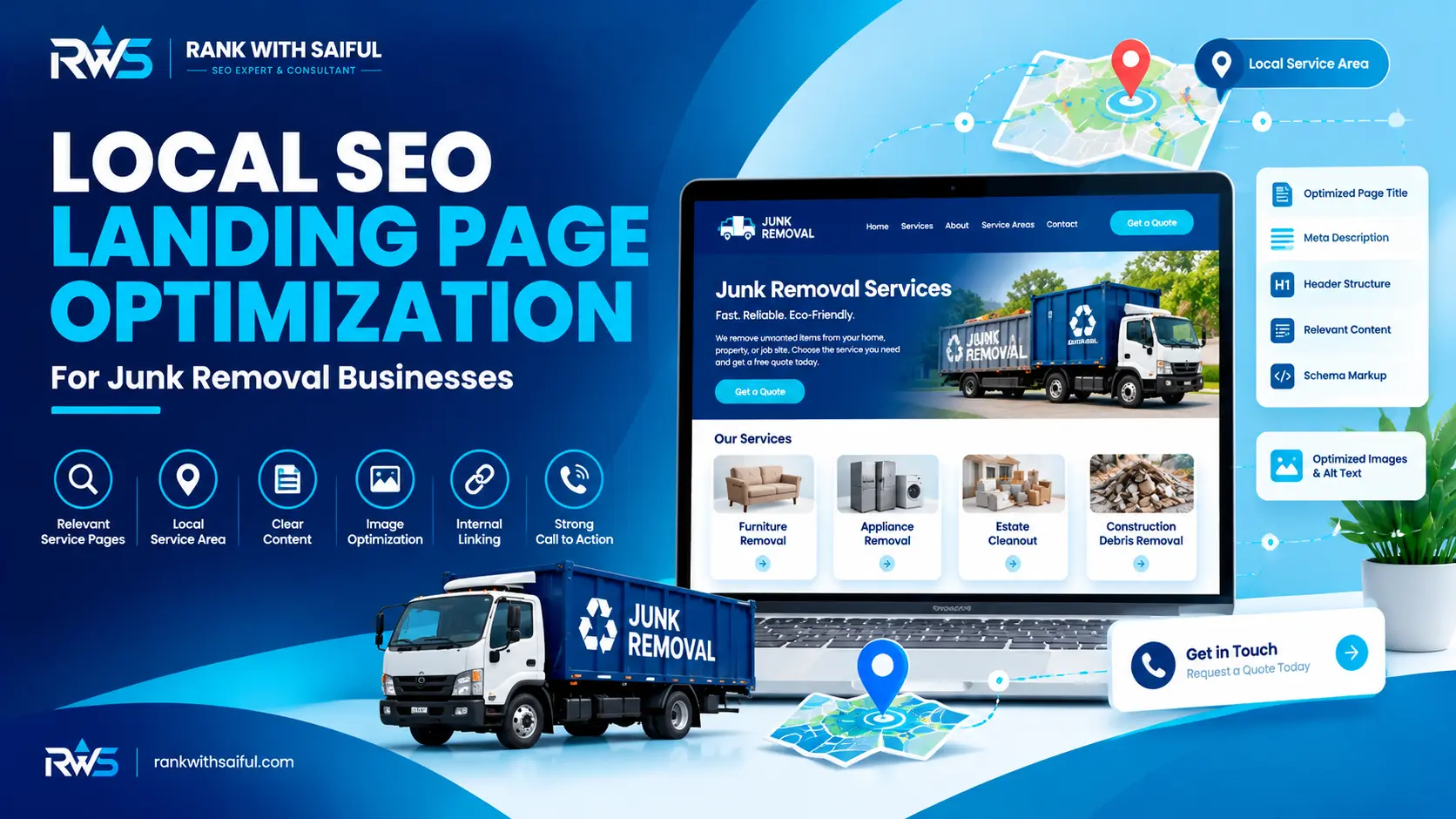
A Junk Removal website should clearly communicate its services and the areas it genuinely serves.
Important website elements may include:
• Clear service pages
• Useful location information
• Relevant local content
• Consistent business information
• Descriptive internal links
• Clear contact and conversion paths
The website should be created primarily for customers while also providing clear context for search engines.
10. Monitor and Improve the Strategy
Google Maps optimization should be reviewed over time rather than treated as a one-time setup.
Useful areas to monitor include:
• Google Business Profile visibility
• Search queries
• Website clicks
• Customer calls
• Direction requests, where relevant
• Review activity
• Website organic search performance
Performance data can help identify areas that may need further optimization and can reveal new opportunities for useful content and service improvements.
My Google Maps Optimization Approach
Audit → Optimize → Connect → Monitor
Audit
Review the Google Business Profile, business information, categories, services, photos, reviews, website connection, and local search presence.
Optimize
Improve the profile using accurate business information, relevant categories, appropriate services, useful photos, and complete profile details.
Connect
Strengthen the relationship between the Google Business Profile, website service pages, local content, citations, and other relevant local signals.
Monitor
Review available search and business data to identify areas for improvement and new opportunities.
Final Thoughts
Google Maps optimization is more than completing a Google Business Profile and adding a few keywords.
A stronger approach connects accurate business information, relevant categories, useful services, genuine customer reviews, original business content, a relevant website, and consistent local signals.
For a Junk Removal business, the goal should be to create a trustworthy and useful local search presence that helps potential customers understand the business and take the next step.
Important Note
This portfolio item is a strategy demonstration created for educational and portfolio purposes. It does not represent a completed client project, client ranking result, traffic increase, lead increase, or guaranteed SEO outcome.