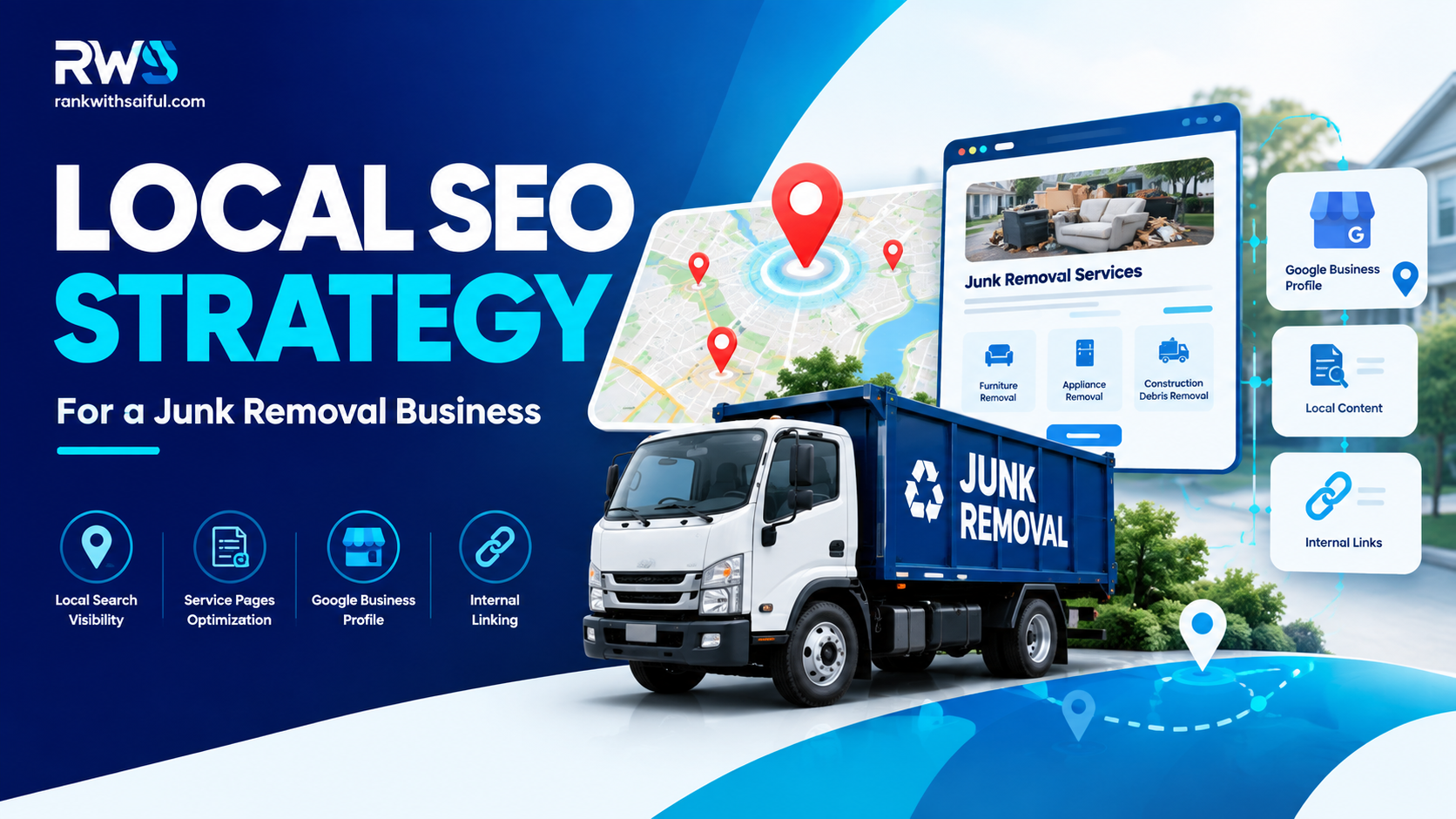
Strategy Overview
A strong Local SEO strategy starts with understanding the business, its services, service areas, customers, competitors, and the search intent behind local searches.
For a Junk Removal business, the goal is to build a search presence that clearly connects the business with the services and locations customers are searching for.
This strategy focuses on the website, Google Business Profile, local relevance, content structure, and internal linking.
What This Strategy Covers
• Local keyword research
• Junk removal service pages
• Service-area targeting
• Google Business Profile optimization
• Local on-page SEO
• Internal linking
• Local content strategy
• Citation and NAP consistency
1. Understand the Business and Search Intent
Before optimizing a website, the first step is understanding what the business actually offers and what potential customers are searching for.
For a Junk Removal company, this may include services such as:
• Furniture removal
• Appliance removal
• Mattress removal
• Construction debris removal
• Estate cleanouts
The goal is to connect each important service with the appropriate search intent rather than targeting every keyword on a single page.
2. Build a Clear Service Page Structure
Each important service should have a clear and useful page when there is enough value and search demand to justify it.
A service page should clearly explain:
• What the service includes
• Who the service is for
• How the process works
• Where the service is available
• Frequently asked questions
• How customers can request the service
This creates a clearer website structure for both users and search engines.
3. Optimize for Local Search
Local relevance is an important part of a Junk Removal SEO strategy.
The website should clearly communicate:
• Business location
• Service areas
• Services offered
• Contact information
• Local context
• Relevant internal links
Location information should be useful and natural rather than repeated simply to target keywords.
4. Google Business Profile Optimization
The Google Business Profile should accurately represent the business and its services.
Important areas to review include:
• Primary and secondary categories
• Business information
• Services
• Business description
• Service areas
• Photos
• Reviews and review responses
• Website connection
The website and Google Business Profile should communicate consistent business information.
5. Strengthen Internal Linking
Internal links can help users and search engines discover related pages.
For example:
Homepage → Service Pages
Service Pages → Location Pages
Blog Articles → Service Pages
Related Service Pages → Related Services
This creates a more connected website structure and helps build topical relevance around important services.
6. Build Supporting Content
A strong Local SEO strategy should not depend only on service pages.
Supporting content can answer useful customer questions and strengthen topical coverage.
Examples include:
• Junk removal preparation guides
• What items a junk removal company accepts
• Junk removal service questions
• Local search intent topics
• Seasonal junk removal topics
The supporting content should naturally connect back to relevant service pages.
7. Measure and Improve
SEO should be treated as an ongoing process.
Important areas to monitor include:
• Organic search performance
• Search queries
• Search impressions
• Clicks
• Google Business Profile visibility
• Website engagement
• Lead and call activity
The strategy can then be refined based on actual search data and business priorities.
My Approach
Research → Optimize → Build → Measure
The first step is understanding the business and its search landscape.
The next step is optimizing the website, Google Business Profile, content, and local signals.
After that, supporting content and internal links can be developed to create a stronger search ecosystem.
Finally, performance data can be reviewed to identify new opportunities and areas for improvement.
Important Note
This portfolio item is a strategy demonstration created for educational and portfolio purposes. It does not represent a completed client project or guaranteed SEO results.