Strategy Overview
A well-structured website helps potential customers understand a business’s services, service areas, and next steps. For junk removal companies, landing pages should communicate relevant service information clearly while supporting the website’s broader Local SEO strategy.
This strategy demonstration explores how on-page optimization and landing page improvements can help a junk removal website become more useful to both search engines and potential customers.
These improvements should work alongside a broader Local SEO strategy for Junk Removal companies.
The Challenge
Junk removal businesses may offer several services, including furniture removal, appliance removal, mattress removal, estate cleanouts, and construction debris removal.
When a website does not clearly explain these services, visitors may struggle to find the information they need. Search engines may also have difficulty understanding how individual pages relate to specific services and customer needs.
A practical optimization strategy should address these issues without creating unnecessary pages or repeating similar content across the website.
My Optimization Strategy
1. Understand Search Intent
The first step is understanding what potential customers want when they search for junk removal services.
Some people may be looking for furniture removal, while others need help with an estate cleanout or construction debris removal.
I would organize relevant search queries by service intent and identify which existing pages best address those needs. Effective Junk Removal keyword research can help identify relevant services and search opportunities.
Optimization focus:
- Identify the main search intent for each important page.
- Match page content to the service being offered.
- Avoid targeting unrelated services on a single page.
- Use keyword research to guide content decisions naturally.
2. Build a Clear Landing Page Structure
Each important landing page should have a clear purpose and provide useful information about its specific service.
For example, a junk removal business might need dedicated pages for:
- Furniture Removal
- Appliance Removal
- Mattress Removal
- Estate Cleanout
- Construction Debris Removal
These pages should only be created when the business genuinely offers the services and there is enough useful information to justify separate pages.
Optimization focus:
- Create descriptive page titles.
- Use a clear main heading.
- Organize content with meaningful subheadings.
- Explain the service, process, and relevant limitations.
- Provide a clear next step for potential customers.
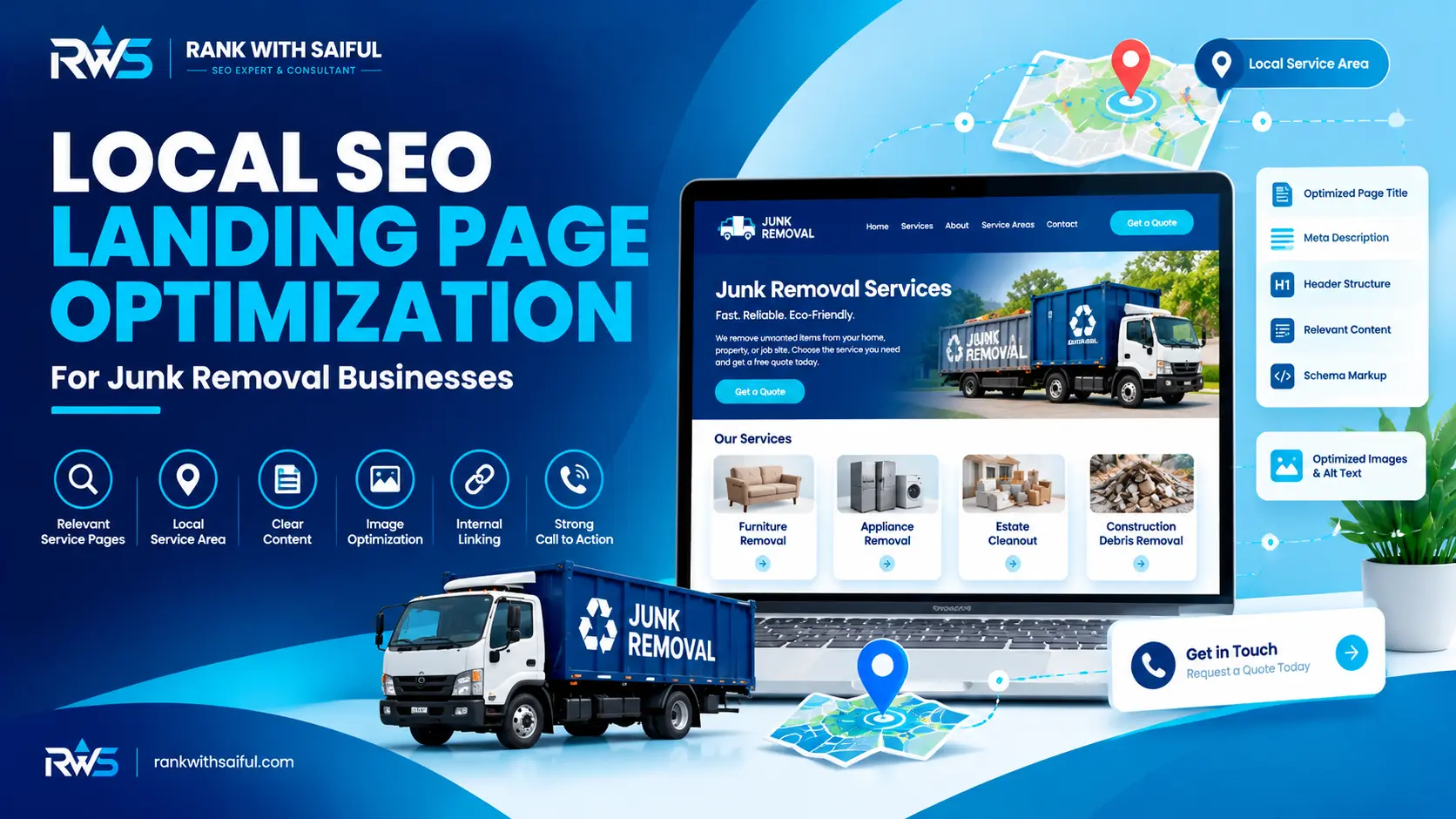
3. Improve On-Page SEO Elements
On-page optimization helps communicate a page’s subject and purpose.
I would review each priority landing page to identify opportunities to improve its titles, headings, URL structure, content, and supporting elements.
Optimization focus:
- Write a unique, descriptive SEO title.
- Create a helpful meta description.
- Use a readable, relevant URL.
- Include important terms naturally in the content.
- Optimize images with descriptive file names and appropriate alt text.
- Avoid keyword stuffing and repetitive wording.
The objective is to make each page more understandable and useful, rather than simply adding more keywords.
4. Strengthen Local Relevance
Junk removal is a location-dependent service. Potential customers need to know whether a company serves their area.
Landing pages should therefore communicate relevant service-area information accurately.
Optimization focus:
- Clearly explain the areas the business actually serves.
- Include local context where it helps visitors.
- Keep business information consistent across relevant website pages.
- Avoid creating multiple near-identical city pages with little unique value.
- Ensure that location-related claims reflect the actual service offered.
Local relevance should come from genuine business information, not from inserting city names repeatedly. Accurate business information and a properly maintained profile also support a broader Google Maps optimization strategy.
5. Improve Internal Linking
Internal links help visitors navigate the website and help search engines discover relationships between relevant pages.
I would review the website’s existing structure and connect important landing pages with relevant supporting content.
Optimization focus:
- Link from the homepage to important service pages.
- Connect related services when the relationship is useful to visitors.
- Link relevant blog articles to appropriate landing pages.
- Use descriptive, natural anchor text.
- Avoid adding unnecessary links that interrupt the reading experience.
A well-planned internal linking structure should help users find the information they need with less effort.
6. Improve the Customer Journey
Landing pages should not only explain services; they should also make it easy for potential customers to take the next step.
Visitors should be able to understand what the business offers and how to contact it.
Optimization focus:
- Display clear contact information.
- Make phone and inquiry options easy to find.
- Explain what customers can expect from the service.
- Use clear calls to action.
- Ensure that the page works well on mobile devices.
- Remove unnecessary distractions from the conversion path.
The goal is to make the experience straightforward without making unrealistic promises about rankings or lead volume.
7. Review and Measure Performance
After implementing changes, the next step would be to monitor how the optimized pages perform.
Google Search Console and website analytics can help identify opportunities for further improvement.
Metrics to review:
- Search impressions and clicks.
- Search queries associated with each landing page.
- Organic landing-page traffic.
- Engagement with important page content.
- Phone calls and inquiries, where reliable tracking is available.
Performance should be evaluated over time. Before and after making improvements, a Local SEO audit checklist can help identify website issues and opportunities that deserve attention.
My Approach
My approach to Local SEO landing page optimization follows a practical process:
Research → Plan → Optimize → Connect → Measure
First, understand the services and search intent. Next, organize the landing pages around genuine customer needs. Then improve the on-page elements, connect relevant content through internal links, and review performance data to identify the next opportunities.
This process supports a more organized website and a clearer experience for potential customers.
Expected Strategic Benefits
When implemented appropriately, this approach can help a junk removal business work toward:
- Clearer service information.
- Better-organized landing pages.
- Stronger alignment between page content and search intent.
- More useful internal navigation.
- Improved communication of relevant service-area information.
- A clearer path for visitors to contact the business.
These are strategic objectives, not verified results from a completed client campaign.
Final Thoughts
Local SEO landing page optimization is about more than adding keywords to a website. It involves understanding customer needs, organizing services clearly, improving page content, and making relevant information easy to find.
For junk removal businesses, a useful landing page should explain the service, communicate relevant local information, and help potential customers understand what to do next.
A thoughtful on-page strategy can provide a stronger foundation for broader Local SEO efforts.
Important Note
This portfolio entry is an SEO strategy demonstration created for educational and portfolio purposes. It illustrates my approach to landing page optimization for a junk removal business. It does not represent a completed client project, verified campaign results, or a guarantee of search rankings, traffic, or leads.